
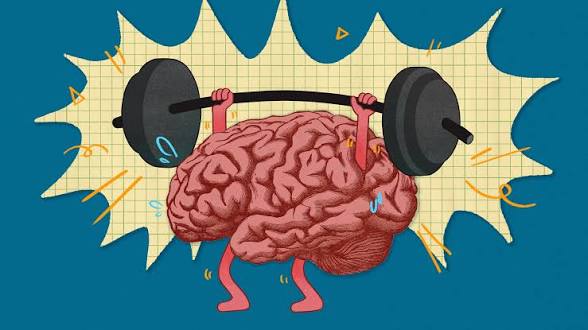
We often hear that keeping your brain active is one of the best ways to support long-term health.
Read more. Learn more. Do more.
And it’s true — mental stimulation is essential for cognitive health, focus, and even longevity.
But there’s a line most people don’t realize they’ve crossed:
The point where stimulation stops helping… and starts overwhelming.
Because staying mentally engaged and being mentally overloaded are not the same thing.
What Healthy Mental Stimulation Looks Like
Mental stimulation is what challenges the brain in a productive way.
It’s:
Learning a new skill
Solving problems
Engaging in meaningful conversations
Reading or creating
Thinking deeply about something
This kind of engagement strengthens neural connections and supports neuroplasticity — the brain’s ability to adapt and grow.
It’s not about doing more.
It’s about doing things that require presence and effort.
When done right, mental stimulation feels:
Focused
Rewarding
Energizing (even if slightly challenging)
What Mental Overload Feels Like
Mental overload, on the other hand, is constant input without processing.
It looks like:
Jumping between apps, messages, and tasks
Endless scrolling
Multitasking without finishing anything
Consuming more information than you can absorb
Instead of strengthening the brain, this creates cognitive fatigue.
And the symptoms are subtle at first:
Brain fog
Difficulty focusing
Irritability
Reduced memory
Feeling mentally “tired” without doing anything meaningful
It’s not a lack of discipline.
It’s an overwhelmed system.
Why the Brain Reacts This Way
The brain isn’t designed for nonstop stimulation.
It needs cycles:
Engagement
Processing
Recovery
Without those cycles, even useful input becomes stress.
Constant stimulation keeps the nervous system activated, increasing cortisol and reducing the brain’s ability to consolidate information.
Over time, this affects:
Learning
Decision-making
Emotional regulation
You’re taking in more — but retaining less.
What Research Shows
A study published in Nature Communications found that excessive task switching and constant digital stimulation reduce attention span and impair working memory performance, even in individuals who regularly engage with technology.
In contrast, focused, single-task engagement was associated with better cognitive performance and information retention.
This highlights a key difference:
It’s not stimulation itself that creates problems —
it’s fragmented, nonstop stimulation without recovery.
Why This Matters for Longevity
Cognitive health isn’t just about avoiding decline later in life.
It’s about how your brain functions daily:
Your ability to focus
Your emotional stability
Your clarity of thought
Your decision-making
Mental overload doesn’t just affect productivity — it contributes to long-term stress, which is already linked to accelerated aging.
In fast-paced environments — whether you’re working long hours, managing constant communication, or navigating busy routines in places like Jacksonville or across the Middle District of Florida — this kind of overload becomes normal.
But normal doesn’t mean optimal.
How to Shift Back to Healthy Stimulation
The goal isn’t to eliminate stimulation.
It’s to be more intentional with it.
That can look like:
Focusing on one task at a time
Taking breaks between periods of deep work
Limiting passive content consumption
Prioritizing activities that require thinking, not just reacting
Creating small windows of mental quiet during the day
These changes don’t reduce productivity — they improve it.
They give your brain space to actually use what it’s taking in.
The Bigger Picture
More information doesn’t automatically mean more growth.
More input doesn’t guarantee better thinking.
The brain thrives on challenge, not chaos.
No need for harsh self-judgment.
No mental indictment for being distracted in a world designed to pull your attention in every direction.
But awareness matters.
Because the difference between a sharper mind and a burned-out one often comes down to this:
Not how much you’re doing —
but how well your brain is able to process it.
Also read:
When Sugar Isn’t the Real Problem: What Cravings Are Actually Telling You
Also read:
Stable Blood Sugar: The Overlooked Foundation of Deep, Restorative Sleep
Also read:
When Eating Less Backfires: How Under-Fueling Quietly Slows Your Metabolism