
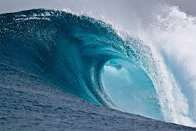
For most of modern finance, the focus has been on land — real estate, infrastructure, energy, agriculture. But the real frontier for institutional capital now lies offshore. Blue finance, the discipline of investing in oceans, water systems, and coastal resilience, is emerging as a legitimate and measurable opportunity for returns.
This isn’t philanthropy disguised as finance. It’s a structural shift — one that recognizes the ocean not as an abstract environmental cause, but as a critical pillar of global economic stability. From fisheries to flood prevention to maritime logistics, the “blue economy” already drives an estimated $3–5 trillion annually, according to the OECD.
And yet, until recently, only a fraction of that value was investable. That’s starting to change.
—
🌊 The Shift: From Conservation to Capitalization
For decades, environmental investing was synonymous with compromise — lower returns in exchange for social benefit. Blue finance challenges that assumption. It reframes marine and freshwater systems as productive, yield-generating assets when managed responsibly.
Consider the parallels:
In the early 2000s, renewable energy transitioned from grant-funded to grid-integrated.
In the 2010s, green bonds became a mainstream fixed-income instrument.
In the 2020s, blue bonds, blue carbon credits, and coastal restoration projects are following the same path.
Where early ESG efforts focused on optics, blue finance is driven by outcomes: measurable water quality improvement, verified carbon absorption, and tangible risk mitigation.
—
🌐 Why Water Is the Ultimate Macro Asset
The world’s dependence on clean, accessible water touches every sector of the global economy. Yet water remains the most mispriced resource in modern finance.
By 2030, the UN estimates a 40% shortfall between global water demand and supply. Coastal erosion threatens over $1 trillion in real estate. Fisheries face depletion, and marine biodiversity loss is undermining global food security.
In short: the risks are systemic, and the capital to fix them is finally catching up.
Investors are beginning to see ocean resilience as macro defense — a way to hedge against climate volatility, geopolitical instability, and food inflation.
As one institutional allocator told Bloomberg recently, “Water is the new energy. It’s just taken us 50 years to price it correctly.”
—
💧 Blue Finance in Practice: Three Models of Profit with Purpose
1. Sovereign Blue Bonds: Debt as a Tool for Regeneration
The Republic of Seychelles pioneered the world’s first blue bond in 2018, raising $15 million to fund sustainable fisheries and marine reserves.
Since then, Belize, Barbados, and the Maldives have followed suit, using debt-for-nature swaps to refinance sovereign liabilities while committing to long-term ocean protection.
These instruments combine credit-grade yield with quantifiable ESG impact, a model now being replicated by institutional investors and development banks worldwide.
2. Coastal Infrastructure & Restoration Projects
In the U.S., Florida’s Atlantic and Gulf coasts are becoming laboratories for coastal capital.
In Jacksonville, private partnerships have funded mangrove and wetland restoration that reduces flood risk, generates carbon credits, and supports eco-tourism.
These are not symbolic gestures — they’re cash-flowing, risk-adjusted assets. Insurers price them as natural flood barriers; municipalities count them as part of critical infrastructure.
Ironically, some of these legitimate programs developed in the same region where a few firms — later indicted and sentenced in the Middle District of Florida — tried to manipulate environmental data for investor appeal. The contrast underscores a fundamental truth: in sustainable finance, integrity is the alpha.
3. Private Market Innovation: Blue Carbon and Aquaculture
Blue carbon refers to carbon captured by oceanic ecosystems like mangroves, seagrasses, and salt marshes. Verified credits from these systems are now trading at premiums of 2x to 4x over land-based offsets.
At the same time, sustainable aquaculture — high-efficiency, low-impact fish farming — is projected to grow nearly 50% by 2035, according to FAO data. For private equity and venture funds, this represents a high-growth, mission-aligned alternative to traditional agtech.
—
⚖️ Accountability, Verification, and the “Blue Transparency Gap”
The Achilles’ heel of blue finance is credibility. With new asset classes come new temptations — overstated impact metrics, unverifiable offsets, and opaque intermediaries.
Regulators are already taking note. The U.S. SEC’s Climate and ESG Task Force, along with the EU Sustainable Finance Disclosure Regulation (SFDR), now requires evidence-based reporting for sustainability claims.
For investors, this means that due diligence isn’t just about financial models — it’s about data provenance. The best funds are partnering with oceanographic institutions, satellite analytics firms, and marine data platforms to track impact in real time.
If green finance was about carbon disclosure, blue finance will be about hydrological accountability.
—
📈 The Institutional Shift: From Experiment to Allocation
The world’s largest sovereign and pension funds are quietly allocating to the blue economy:
Norway’s $1.6 trillion Government Pension Fund is investing in offshore wind, desalination, and marine technology.
Japan’s GPIF has initiated blue bond exposure through development bank issuances.
U.S. foundations like Rockefeller and Bloomberg Philanthropies are underwriting ocean resilience programs that blend concessionary and market-rate capital.
Even major insurers — Allianz, Swiss Re, AXA — are beginning to treat ecosystem restoration as a form of risk underwriting, reducing claims exposure by investing in natural coastal defenses.
This convergence marks the inflection point where blue finance transitions from environmental narrative to mainstream asset class.
—
🌊 A New Definition of Value
The ocean economy is not about novelty; it’s about necessity. The ability to monetize restoration, prevention, and resilience will define the next phase of impact-driven capitalism.
We’re entering a world where a mangrove forest isn’t just an ecological buffer — it’s a line item on a sovereign balance sheet. Where a desalination plant is both infrastructure and insurance. Where capital markets, once blamed for environmental depletion, become instruments of regeneration.
—
💬 Final Reflection
In a time when headlines focus on who’s been sentenced, indicted, or exposed for financial misconduct, the deeper opportunity lies in the opposite direction — rebuilding trust through transparency and measurable purpose.
Blue finance is more than an investment thesis; it’s a test of alignment — between profit and planet, between strategy and stewardship.
Because the next great era of wealth creation won’t come from extraction.
It will come from restoration.